
The XAP.ai Whitepaper
Business intelligence designed for 99% of the world’s businesses.
IN THE XAP WHITEPAPER
- Executive summary
- Why XAP
- Our vision, mission and purpose
- The opportunity
- Who XAP serves (the 99%)
- The market AI is creating
- The XAP approach
- Three potential moats
- 1. XAP Lumen: a business-intelligence flywheel
- 2. XAP Continuum: understanding the mind of the business
- 3. XAP Books: better decisions built on better data
- What exists today
- An AI-native architecture
- From advice to action
- The business
- Principles
- Conclusion
- Important notice
- References
Executive summary
Large companies, about 1% of all businesses, make their decisions with teams of analysts and advisers. The other 99%, from start-ups to mid-sized firms, mostly make theirs alone, with instinct and a spreadsheet.
XAP.ai is built to change that.
Imagine a team of world-class business advisers at your fingertips, at a price any SME can afford. XAP’s AI agents are designed to help any business, from start-up to mid-sized, make better strategic decisions than they could alone, with advice equal to or better than that of human consultants.
The result: stronger performance, lasting wealth and greater freedom.
Anyone can plug a chatbot into a business. Generic AI knows a little about everything. XAP is built around your business: your industry, your country, your numbers. It is designed to improve over time, because three assets are designed to compound:
- XAP Lumen is designed to operate as a business-intelligence flywheel. It combines the practical experience of seasoned advisers with anonymised patterns drawn from across XAP’s clients, so that each client’s results are designed to improve the advice given to every client.
- XAP Continuum is designed to understand how each business actually works: its people, its rules and the way it makes decisions.
- XAP Books is designed to supply the timely, complete financial data on which good decisions depend.
XAP’s agents are designed to use all three to move from advice to action. Better outcomes should bring more clients, more clients should bring more patterns, and more patterns should bring better advice. That loop is the business.
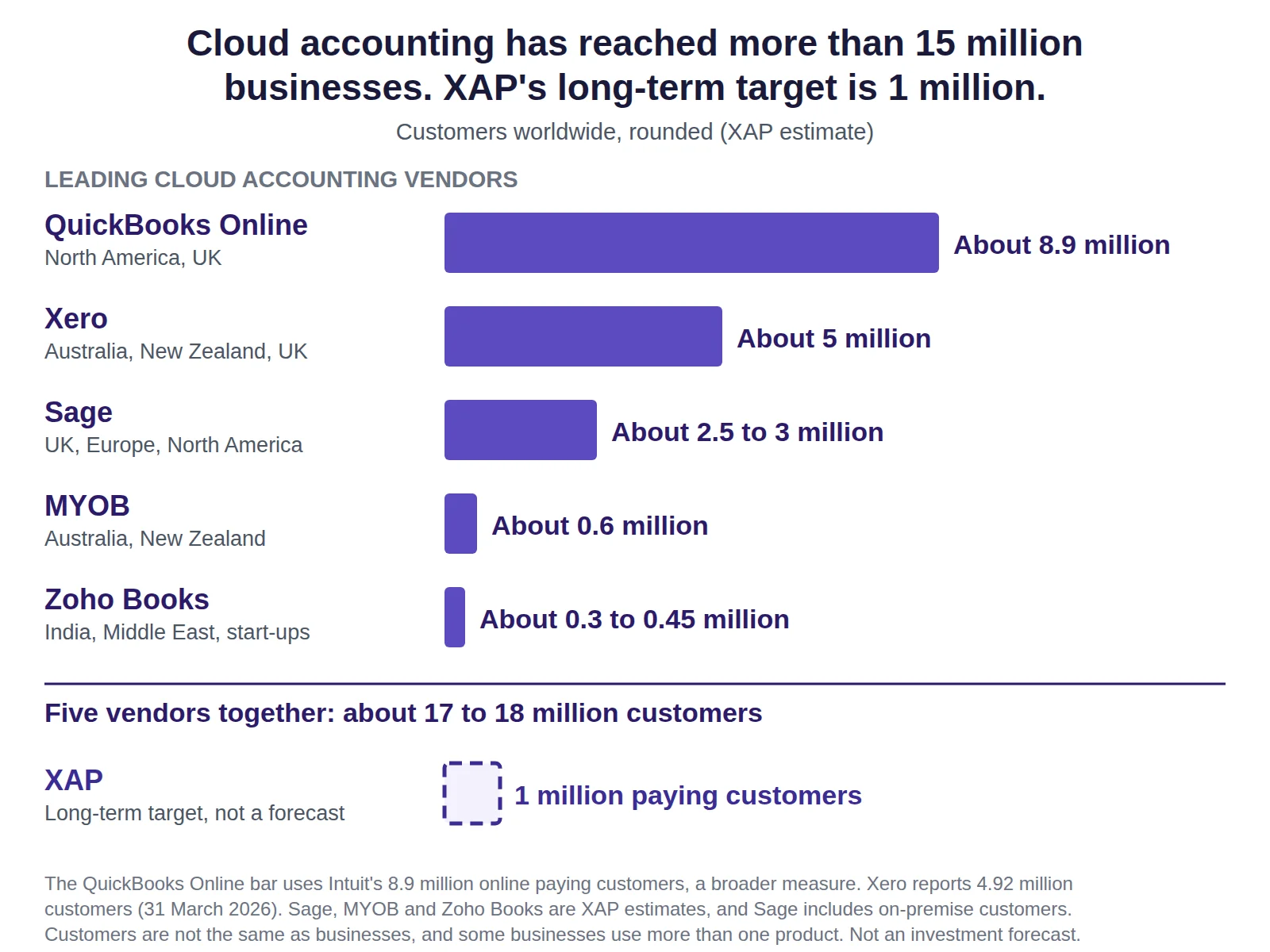
The ambition is one million paying customers. This is a long-term target, not a forecast, and it is under 1% of the roughly 130 million businesses in XAP’s estimate. Where XAP is today: pre-revenue, with XAP.bot live and XAP Advisor in private beta. The next milestone is proving product-market fit and repeatable acquisition.
Why XAP
XAP is pronounced “zap”: a catalyst to transform a business. The name also stands for:
- eXperience: an excellent customer experience.
- Anywhere/Anytime: control of the business from your fingertips.
- Performance: business growth and wealth creation.
Our vision, mission and purpose
Vision. To become the default AI business adviser for millions of SMEs worldwide, helping owners achieve better performance, lasting wealth and freedom.
Mission. To give SMEs and SMBs expert-level AI business advice that is always available, far more affordable than human consultants, and built on open, decentralised technology with privacy and data security designed in.
Purpose. To help SMEs increase business performance, leading to wealth and freedom (lifestyle).
The opportunity
Millions of owners make high-stakes decisions without the expertise that large companies take for granted. Strategic advice is expensive.
Accounting software records what happened, but the data is often late or incomplete, and it leaves owners to work out what it means and what to do next.
AI is also changing the economics of software itself. We believe much of today’s software will become a commodity, replaced or reshaped by agents that understand the business, make sense of its data and get work done. XAP is built for that transition.
Who XAP serves (the 99%)
XAP is designed for the small and mid-sized businesses that make up about 99% of all businesses.[1]
The world. We estimate a target market for XAP of about 130 million businesses in around 50 countries, including solo and no-staff businesses.[2] The estimate excludes countries like China, India, Russia and most of Africa.
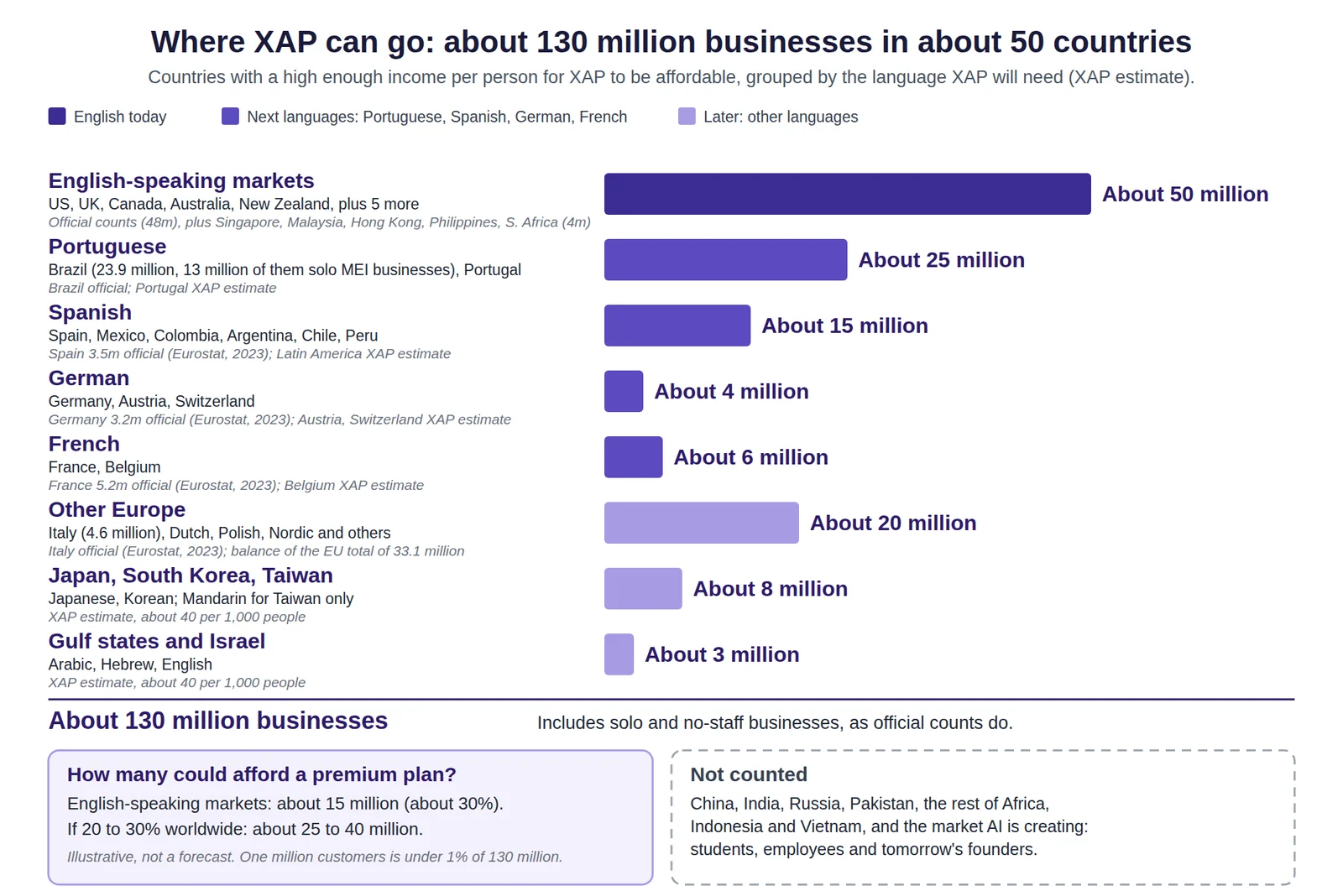
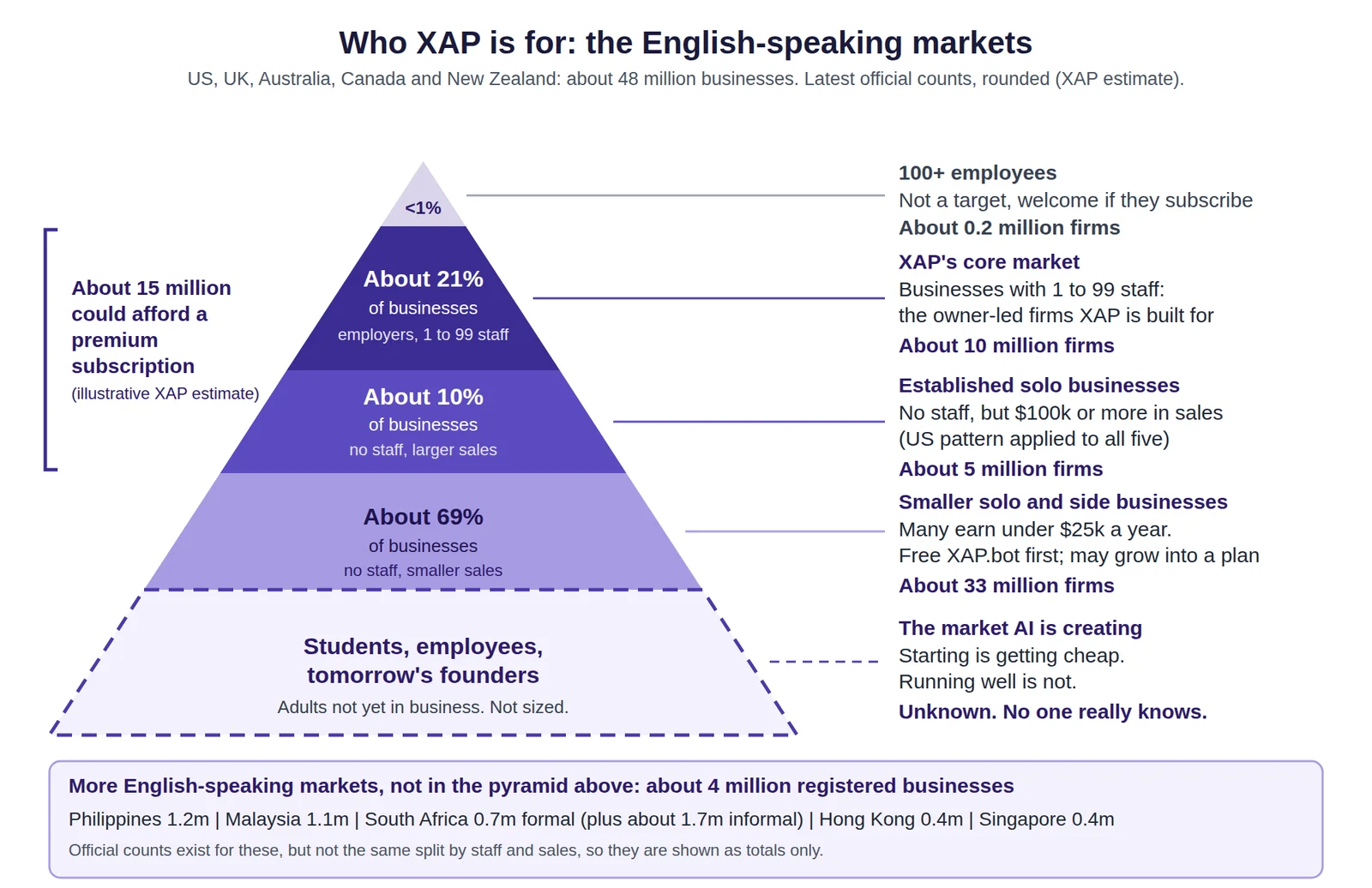
The English-speaking markets. About 50 million of these businesses are in English-speaking markets, and we estimate that about 15 million of them fit XAP very well.[3]
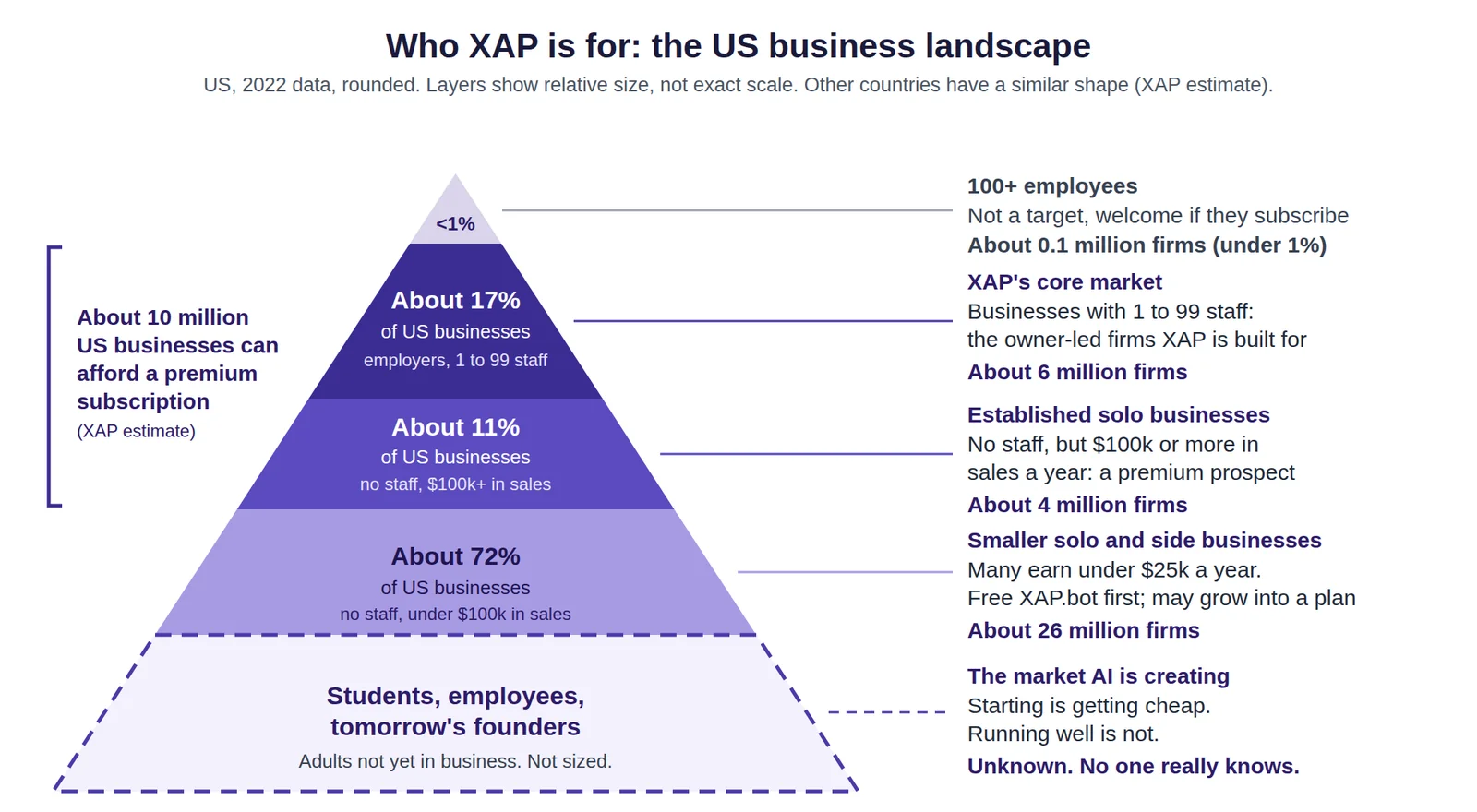
The United States. Of over 36 million US businesses, about 30 million have no staff (solo, gig and side businesses) and about 6 million have 1 to 99 employees. The 6 million are the owner-led firms XAP is built for. We estimate that about 4 million of the firms with no staff also fit XAP’s target market, bringing the total to about 10 million US businesses that could afford a premium subscription.[4]
A reference point from cloud accounting. Over the past 15 to 20 years, cloud accounting software has reached more than 15 million businesses worldwide.[5]
What a small share would mean. Just one per cent of 130 million businesses is more than one million potential customers. We do not know XAP’s conversion rate, and the figures below are arithmetic, not a forecast. Prices are planned, not final.
| Paying customers | XAP Advisor Annual Revenue $97.50/mth (launch price) | All Products Annual Revenue $250/mth (multiple products) |
|---|---|---|
| 100,000 | about $117 million | about $300 million |
| 1,000,000 | about $1.17 billion | about $3.0 billion |
The market AI is creating
Beneath these businesses is a layer that is larger still and impossible to define today: employees with an idea of their own, students, and people who have never thought of themselves as founders. AI lowers the cost of starting, and empowers people with the knowledge, skills and confidence to try. We believe it will create founders who would never have started before, over the coming decades.
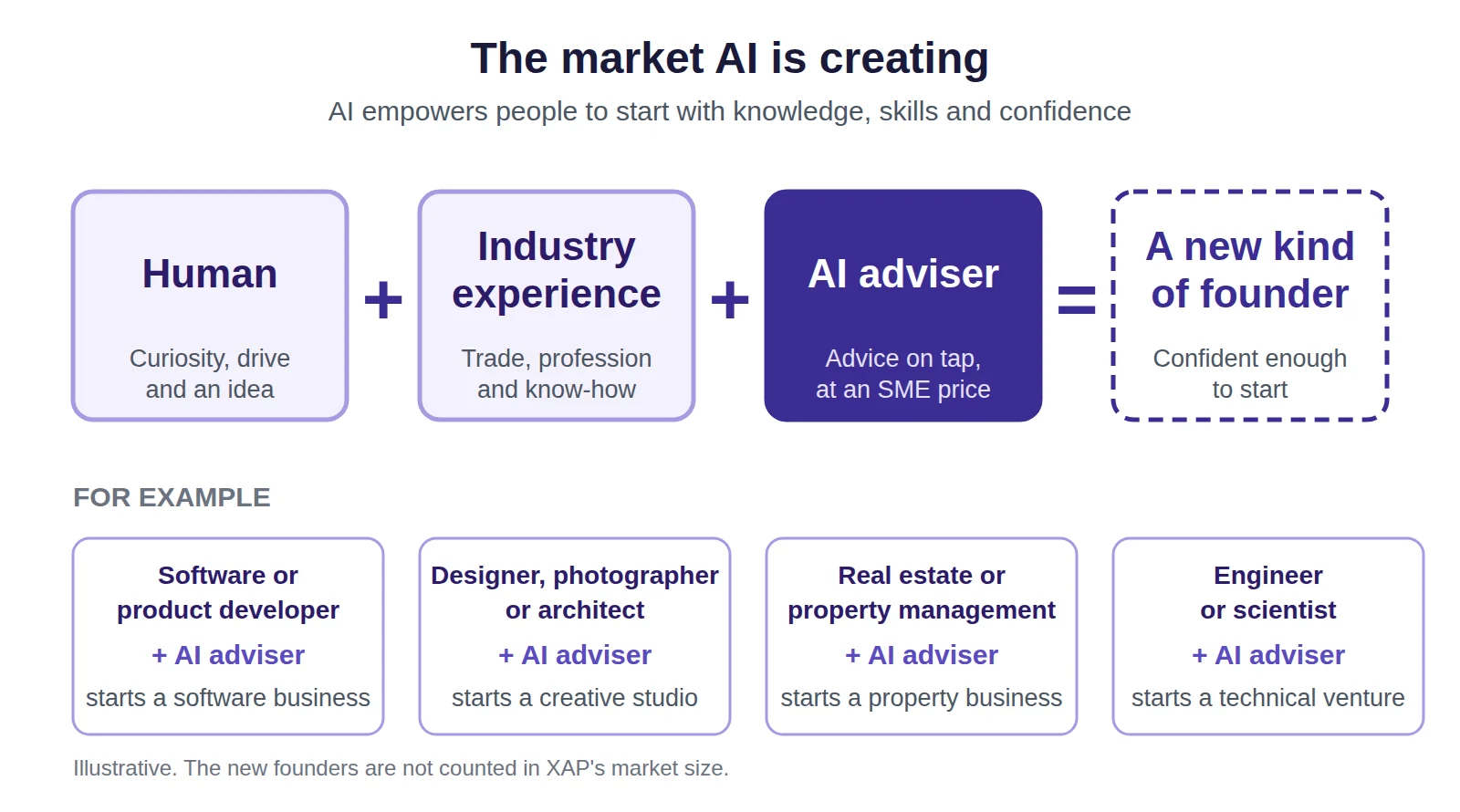
We believe AI will be a catalyst for a much larger number of businesses worldwide.
Starting is getting cheap. Running a business well is not. The hard part moves from building to deciding: what to charge, where the cash is going, whom to hire, what to do next. That is the work XAP is built to help with, from a first question on free XAP.bot, to the first customer, to a business that grows. As these founders grow, the Lumen flywheel is designed to learn from every stage.
Andreessen Horowitz (The a16z Show) describes the same shift for investors:[6] founders should increasingly ask “is this ambitious enough?” rather than “is this too ambitious?”
We do not count this layer in our market size. It is the reason we believe the opportunity is larger than any number we can defend today. XAP speaks to adults who run, or are about to start, a business.
The XAP approach
- Decisions, not dashboards. XAP starts with the decision the owner needs to make, not another application to learn.
- Advice built around your business. Every answer reflects your numbers, your people, your culture and your constraints.
- Affordable for every SME. The kind of advice large companies have always had, at a price an SME can afford.
Three potential moats
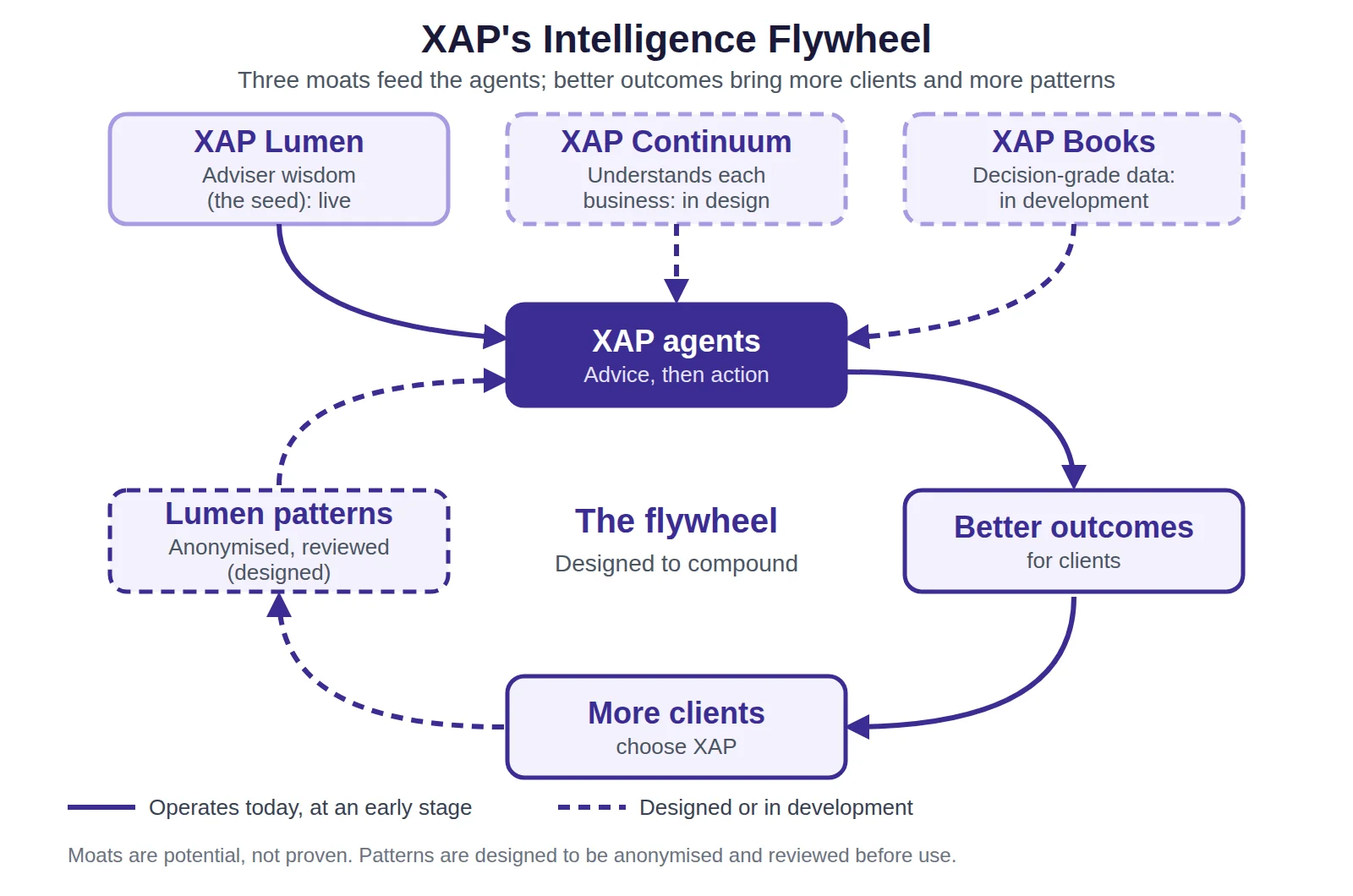
Figure 6, below, shows how they connect.
1. XAP Lumen: a business-intelligence flywheel
Lumen starts with what money cannot easily buy: the hard-won wisdom of experienced advisers, written down, reviewed and put to work inside every XAP agent. That is the seed, and it is live.
The flywheel is what comes next. As clients use XAP, the system is designed to learn which patterns recur and which advice works: for example, that businesses of a given type tend to run into cashflow pressure at a certain point in the year. Those lessons are patterns, not records. They are designed to be anonymised, stripped of anything that identifies a client or its numbers, and reviewed before they are used. Clients are designed to agree to this use through XAP’s Terms.
Each turn of the wheel is designed to compound:
- Clients use XAP and act on its advice.
- Outcomes are validated and anonymised patterns are drawn out.
- Reviewed patterns improve the advice every client receives.
- Better advice leads to better results, which attract more clients.
The flywheel’s strength will depend on the quality, validation and use of what is learned, not the volume. Status: adviser-written content is live inside XAP’s agents. The pattern flywheel is designed. Its anonymisation standard, review process and legal basis are still being specified, and the data XAP may use is limited by partner terms and privacy law.
2. XAP Continuum: understanding the mind of the business
Every business has its own way of working: the owner’s thinking, the culture, the informal rules and exceptions. Most of it is never written down and is lost when people leave. Continuum is designed to build and keep a living understanding of each client, so XAP’s agents don’t start every conversation from zero. Status: in design.
3. XAP Books: better decisions built on better data
Intelligence is only as good as its data. Xero and QuickBooks provide valuable financial infrastructure. Our thesis is that owners still lack a timely, complete picture of the business to decide from. XAP Books is being developed to close that gap, and to be a stronger data foundation for intelligence and action, not just another bookkeeping product. It is designed to work on top of the software a business already uses, Xero first, and to be the ledger too if a customer wants that. Status: in development, aimed at 2027, with a beta first.
Together: Lumen contributes wisdom that is designed to compound across clients, Continuum contributes understanding of each business, and Books contributes the data decisions depend on.
What exists today
| Capability | Status |
|---|---|
| XAP.bot (business questions on Telegram, no card) | Live |
| XAP Advisor (guided business intelligence) | Private beta; waitlist open; public launch planned for early 2027, no date fixed |
| XAP CFO (finance role added to the advisor) | In development |
| Lumen, adviser-written articles | Live inside XAP’s agents |
| Lumen, anonymised pattern flywheel | Designed |
| XAP Books | In development, aimed at 2027, beta first. Waitlist open |
| XAP Continuum | In design |
| XAP Agent Builder (clients add their own culture and rules) | Planned |
An AI-native architecture
XAP favours capable open-weight models over dependence on a single closed-source provider. As at October 2026, XAP does not use ChatGPT, Claude, Gemini or Grok to run a client’s business. We believe open-weight models can do much of the work of business advice at attractive cost, with more flexibility over model choice and deployment. This is designed to reduce vendor dependency and give XAP more control over how business information is processed. Open-weight models do not by themselves guarantee privacy, security or freedom from bias; those depend on deployment, governance and safeguards. Where the models are hosted is still being settled, and we expect it to change.
From advice to action
XAP.bot, an accessible entry point; XAP Advisor, business-specific guidance; specialist agents for functions such as finance and operations; XAP Books, a stronger data foundation; and, over time, a broader agent platform that helps businesses understand, decide and execute. Not every component is built.
The business
Model. XAP is sold as a monthly subscription. XAP.bot is free and is the entry point.
| Product | What it is | Launch price | Planned price |
|---|---|---|---|
| XAP.bot | First-take advice on Telegram | Free | Free |
| XAP Advisor | The core subscription | $97.50 | about $249 |
| XAP Advisor Pro | The same, on a more capable model tier | $195.00 | about $498 |
| XAP CFO | A specialist role added on top | $49.00 | about $149 |
| XAP Books | Bookkeeping and financial data | $67.00 | about $199 |
US dollars per month. Launch prices apply to clients in the private beta. Planned prices are not final.
How a prospect becomes a paying customer. Free XAP.bot conversation, then the XAP Advisor waitlist, then a Strategic Plan and AI Blueprint built with the client, then a subscription. XAP is pre-revenue as at October 2026, so we have no conversion or other numbers.
Go-to-market. Four routes, in order:
- The warm base. XAP 24/7 and its co-founders’ firms serve thousands of clients across a dozen countries. XAP does not start cold: this is a ready pool of potential beta testers.
- Free XAP.bot as the hook, fed by content, email, social media and organic search. This includes education articles for owners, such as the live piece on AI bookkeeping for Xero and QuickBooks users.
- Waitlists for Advisor and Books, which give us demand data before launch.
- Partnerships and paid acquisition, for example the accountant channel. This is under consideration and not yet decided.
Team. Marc R. Bruce, founder and CEO, SME adviser for over four decades and an Australian Chartered Accountant for 25 years. He has consulted to thousands of businesses across more than a dozen countries. Marc leads XAP day to day. He is one of ten co-founders and initial shareholders across six countries: Singapore, the Philippines, Malaysia, Hong Kong, New Zealand and Australia. XAP Pte. Limited, the holding company, is directed by Marc R. Bruce, Gary Sng and Elaine Lim. XAP.ai is built by XAP Financial Technologies Pte. Limited, a Singapore company.
Principles
- Do no harm to people.
- Improve performance and give owners back their time.
- Follow the law, including privacy obligations and the rights of customers and others in each market.
- Protect privacy and keep owners in control. Where practical, XAP prefers encryption, open-weight models and decentralised platforms.
- State our point of view openly. XAP favours freedom of expression and SME growth and lifestyle, within the law, and takes no political sides. We believe closed models can be shaped by their makers’ policies or politics, which is one reason XAP favours open ones.
These are operating constraints, not slogans.
Conclusion
The next generation of business technology will be defined by how well AI understands a business and helps its owner act. XAP is built around that: wisdom that compounds through XAP Lumen, understanding of each business through XAP Continuum, and decision-grade data through XAP Books, delivered by affordable agents.
Our ambition is simple: give every business owner access to intelligence that helps them build a better business, and a better life.
Important notice
This whitepaper is for information only. It is not an offer of securities or investment advice. Market figures, targets and statements about what XAP is designed to do are estimates and intentions, not promises or forecasts. XAP is pre-revenue.
References
- 99%. XAP estimate: businesses with annual revenue under about $10 million. Large companies are about 1% of businesses.
- Global estimate. Official counts where available: US SBA Office of Advocacy, 2025 profile (2022 data); UK Department for Business and Trade, Business population estimates 2025; Australian Bureau of Statistics, June 2024; Innovation, Science and Economic Development Canada, Dec 2024, and Statistics Canada, 2023; MBIE New Zealand, 2025; Eurostat 2023 (EU total 33.1 million; Germany 3.2, France 5.2, Italy 4.6 and Spain 3.5 million); Sebrae from Receita Federal, Dec 2025 (Brazil, 23.9 million). Other rows are XAP estimates, at about 40 businesses per 1,000 people where official data is thin. Counts are not the same measure in every country. Other published reference points: IFC and SME Finance Forum, about 125 million formal MSMEs in 132 economies (2010 report, republished 2020); IFC and McKinsey, 375 to 450 million including informal (2010, via CGAP).
- English-speaking markets. US, UK, Canada, Australia and New Zealand are about 48 million, from the sources above. Singapore, Malaysia, Hong Kong, the Philippines and South Africa add about 4 million registered businesses. “Fit XAP very well” is an XAP estimate: employers with 1 to 99 staff, plus an estimated share of larger no-staff businesses, applying the US pattern.
- United States. US Census Bureau 2022 (35.7 million businesses, 29.8 million with no employees); SBA Advocacy 2025. About 13% of no-staff firms report $100,000 or more in sales (Census Nonemployer Statistics 2023, secondary source, to be checked). “Could afford” is who could pay, not who will.
- Cloud accounting. Intuit reports 8.9 million online paying customers worldwide (fiscal 2026, a broader measure than QuickBooks Online alone). Xero reports 4.92 million customers worldwide (31 March 2026). Sage says it serves millions of small and mid-sized businesses, on-premise and cloud, and MYOB, Zoho and others add to this. XAP estimate; subscriptions are not the same as businesses.
- a16z. The a16z Show, episode “The Frontier Ideas a16z Wants to Fund”, with Marc Andreessen, Ben Horowitz and Chris Dixon (October 2026), as described in the episode notes.
The XAP Whitepaper v3.5 | October 2026